

Sauteed carrots are a straightforward vegetable side that comes together on the stovetop. The cooking process starts by steaming the vegetables in a shallow layer of water. This ensures they soften evenly without burning.
The entire dish takes 20 minutes to prepare and cook. A final addition of butter and honey creates a mild glaze right as the water cooks away. Fresh herbs add a bit of color and flavor right at the end.
Why is Sauteed Carrots a Must-Try?
Covering the skillet early traps steam so the dense root vegetables cook through rapidly.
Removing the lid at the end allows excess moisture to evaporate so the glaze sticks to the vegetables.
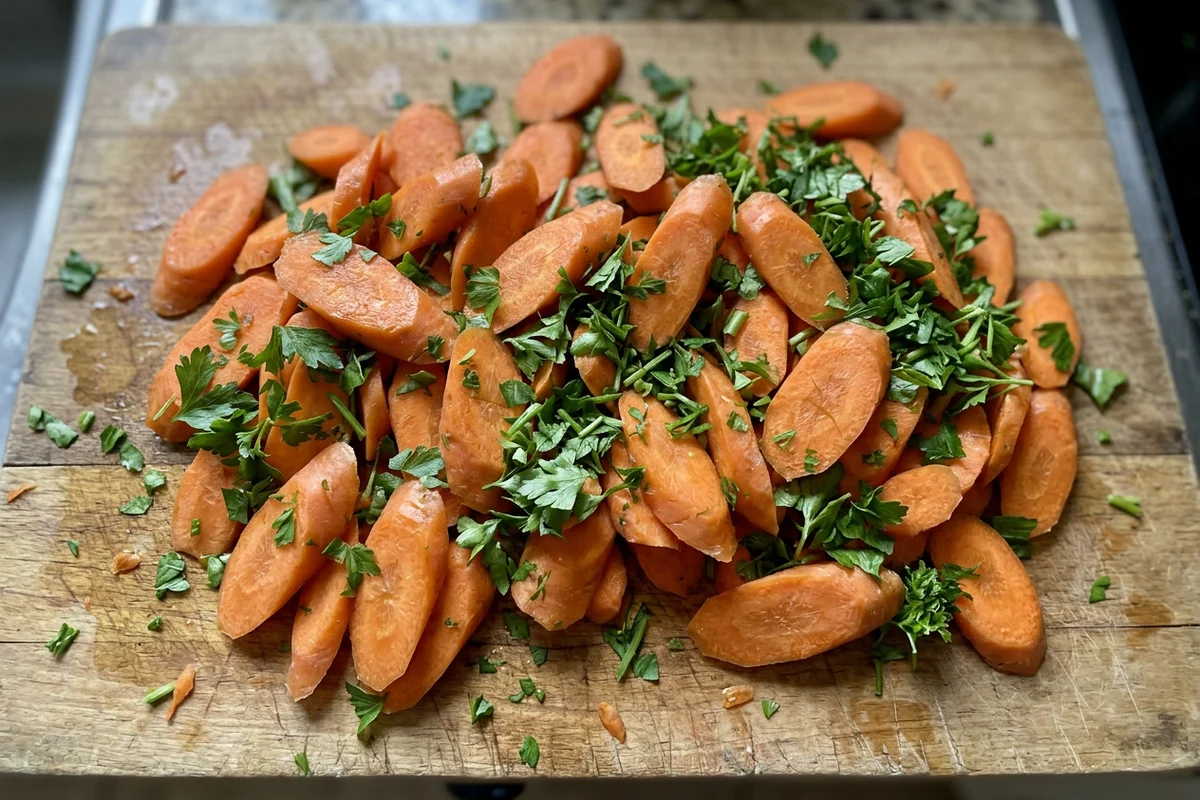
Cutting the vegetables on a diagonal increases their surface area for a faster cooking time.
Ingredients for Sauteed Carrots
• Carrots: Choose firm, bright orange root vegetables. Peel them before slicing to remove any bitter outer skin.
• Butter: Unsalted butter lets you control the sodium in the dish. You can use coconut oil or olive oil for a dairy-free option.
• Honey: This adds a mild sweetness that balances the earthy flavor of the vegetables. Maple syrup works just as well.
• Fresh herbs: Flat-leaf parsley brings a clean, fresh finish. Dill or thyme are also good choices if you have them on hand.
Exact quantities are in the recipe card below.
How to Make Sauteed Carrots
Step 1: Prep the vegetables
Peel the carrots and slice them on a bias about a quarter inch thick. Keeping the pieces uniform helps them cook at the same rate. Place them in a wide skillet with the water and seasonings.
Step 2: Steam in the pan
Bring the liquid to a boil over medium-high heat. Put a lid on the skillet and turn the heat down to medium-low. Let the vegetables simmer for about eight minutes until a fork easily pierces them.
Step 3: Glaze and finish
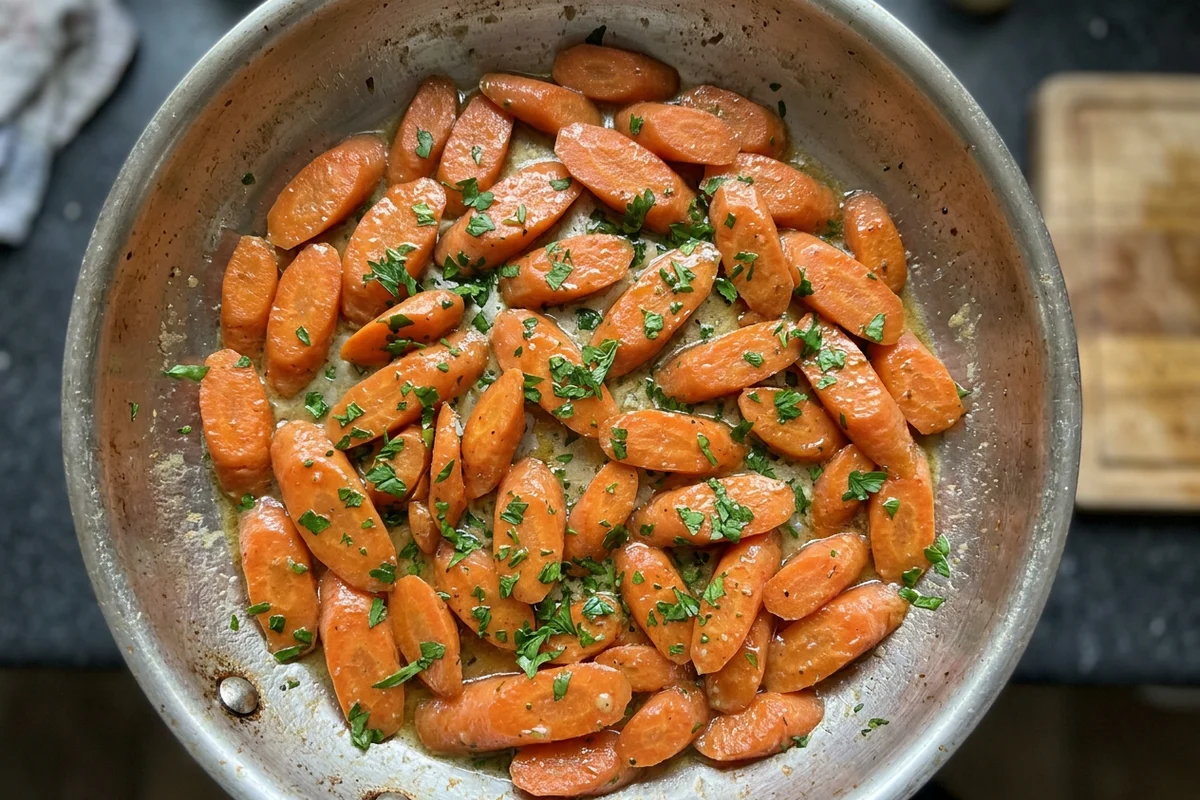
Take the lid off the pan. Stir in the butter and honey. Keep cooking and stirring until the water is gone and the vegetables are lightly coated. Take the pan off the burner and stir in the fresh herbs.
What to Serve with Sauteed Carrots
This pairs well with roasted chicken, pork chops, or baked fish. It also works nicely alongside a scoop of mashed potatoes.
Expert Tips for Sauteed Carrots
Cut the carrots into pieces of similar thickness so they all finish cooking at the same time.
If the water evaporates before the vegetables are tender, add another tablespoon of water and cover the pan again.
Use a wide skillet so the vegetables sit in an even layer. This helps them cook uniformly.
How to Store and Freeze Sauteed Carrots
Keep leftover carrots in an airtight container in the refrigerator for up to 4 days. Freezing is not recommended as the texture will become mushy. Reheat in a skillet over low heat or in the microwave in 30-second intervals until warm.
Sauteed Carrots Recipe FAQs
Do I need to peel the carrots?
Peeling is recommended for a smoother texture and cleaner flavor, but a thorough scrub is fine if you prefer to leave the skins on.
Can I make this without honey?
Yes. You can omit the sweetener entirely or swap it for brown sugar or maple syrup.
Why are my carrots still hard?
They might have been sliced too thick or the heat was too low. Add another tablespoon of water, cover the pan, and cook for a few more minutes.
Sauteed Carrots
Ingredients
- 2 pounds carrots peeled and sliced diagonally 1/4 inch thick, 900 g
- 1/3 cup water 80 ml
- 1 teaspoon kosher salt
- 1/4 teaspoon ground black pepper
- 1 tablespoon unsalted butter 14 g
- 1 tablespoon honey 15 ml
- 1 tablespoon chopped fresh parsley
Instructions
- Place the sliced carrots in a large skillet with a tight-fitting lid.
- Pour the water over the carrots.
- Sprinkle the kosher salt and black pepper into the pan.
- Turn the heat to medium-high and bring the water to a boil.
- Cover the skillet, reduce the heat to medium-low, and cook for 7 to 8 minutes until the carrots are fork-tender.
- Remove the lid and add the butter and honey.
- Stir the carrots continuously as the butter melts and the remaining water evaporates.
- Take the skillet off the heat.
- Stir in the chopped parsley and serve warm.
Notes


