

Shabu shabu is a Japanese hot pot dish where diners cook their own food at the table. Very thin slices of beef and assorted vegetables are swished in a light kelp broth until just cooked. The cooked ingredients are then dipped into tangy ponzu or a creamy sesame sauce.
Setting up this meal takes a bit of chopping and arranging, but the actual cooking happens as you eat. A portable burner keeps the broth hot while everyone selects their favorite pieces to dip. It is a relaxed way to share a dinner and requires very little active cooking time in the kitchen.
Why is Shabu Shabu a Must-Try?
Soaking the dried kelp before heating extracts a savory flavor without making the broth bitter.
Cooking the beef first enriches the simple broth for the vegetables that follow.
Grinding toasted sesame seeds creates a rich base for the homemade dipping sauce.
Ingredients for Shabu Shabu
• Beef: Look for pre-sliced beef labeled for shabu shabu at Asian markets. Ribeye or sirloin cuts work well.
• Kombu: Dried kelp provides the base flavor for the broth. Wipe it gently with a damp cloth before using.
• Chrysanthemum leaves: Also known as shungiku, these leafy greens have a distinct herbal flavor. Spinach or watercress are suitable alternatives.
• Shirataki noodles: These translucent yam noodles come packed in liquid. Rinse them thoroughly under cold water before slicing.
• Ponzu: A citrus-based soy sauce used for dipping. You can find this bottled in the Asian aisle of most grocery stores.
Exact quantities are in the recipe card below.
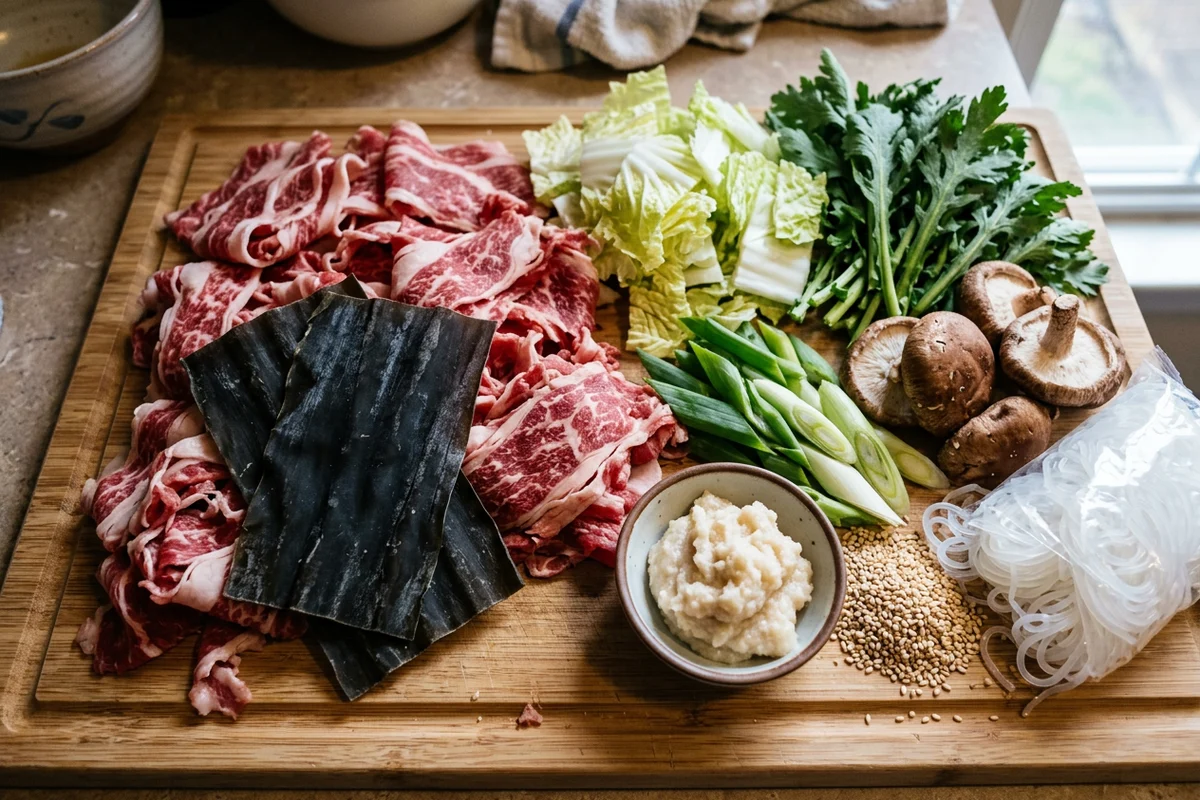
How to Make Shabu Shabu
Step 1: Prepare the broth
Place the dried kelp in a large pot with water and let it soak. This step pulls out the natural savory notes from the kelp. Once soaked, heat the pot until small bubbles form, then remove the kelp before the water reaches a rolling boil.
Step 2: Chop the vegetables
Cut the napa cabbage, scallions, and chrysanthemum leaves into bite-sized pieces. Remove the stems from the shiitake mushrooms and slice the caps. Rinse the shirataki noodles and cut them into shorter lengths so they are easier to pick up with chopsticks.
Step 3: Mix the sesame sauce
Grind the toasted sesame seeds until they release their oils and become slightly damp. Stir in the miso paste, soy sauce, sugar, rice vinegar, and a spoonful of the kelp broth. Mix until smooth and divide into small dipping bowls.
Step 4: Cook at the table
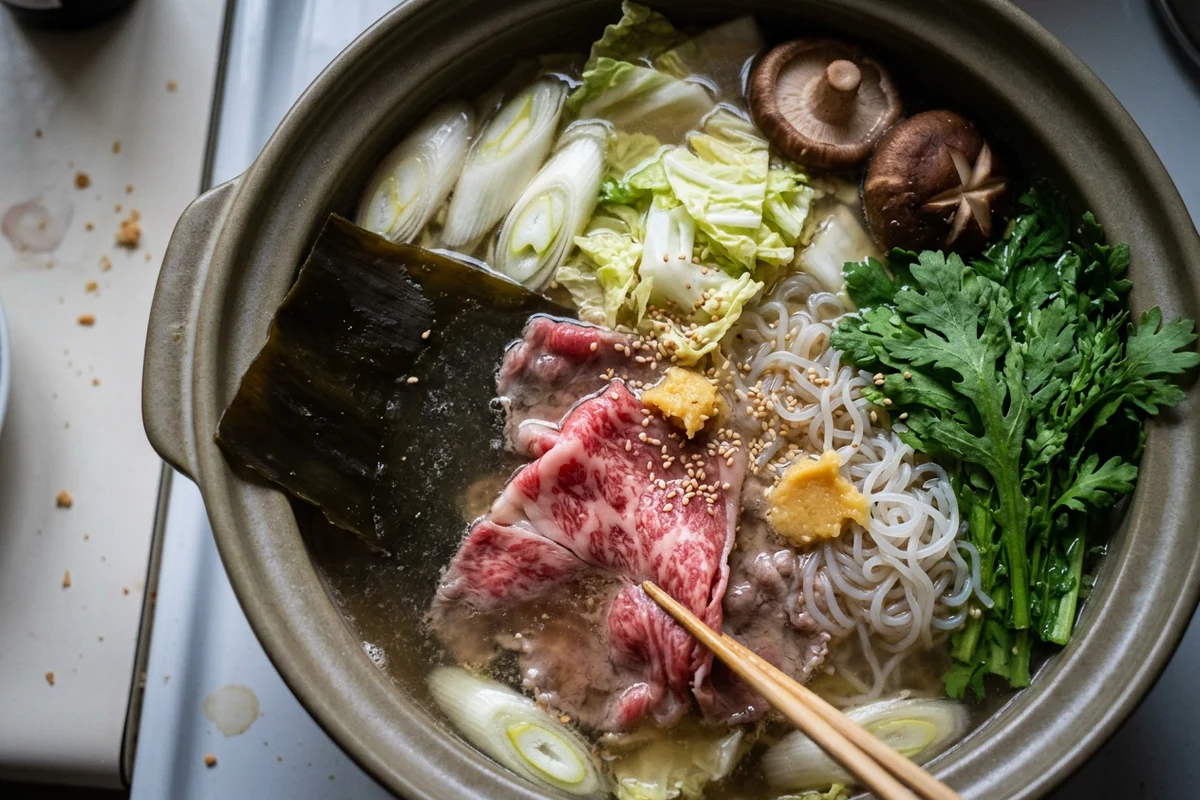
Set the pot of broth on a portable burner in the center of the table. Swish the beef slices in the hot broth until cooked, then dip them in the sauces. Add the vegetables in batches, letting them simmer until tender.
What to Serve with Shabu Shabu
Serve with steamed white rice to soak up the flavorful dipping sauces.
Expert Tips for Shabu Shabu
For food safety, whole cuts of beef should reach 145°F (63°C) with a 3-minute rest. The paper-thin slices used in this dish cook through in seconds in the boiling broth.
Keep a small bowl of clean water next to the pot to rinse your skimming ladle as you remove foam from the broth.
If you do not have a mortar and pestle, you can pulse the sesame seeds in a small food processor or spice grinder.
How to Store and Freeze Shabu Shabu
Store leftover raw beef and vegetables in separate airtight containers in the refrigerator for up to 2 days. The cooking broth can be refrigerated for 3 days and reheated on the stove, but the dish is not suitable for freezing.
Shabu Shabu Recipe FAQs
Do I need a portable burner to make this?
A portable burner allows you to cook at the table, which is the traditional method. If you do not have one, you can cook the ingredients in batches on the stove and bring them to the table in bowls.
Can I use chicken broth instead of kombu broth?
Yes. Kombu provides a traditional, mild base, but a light chicken or vegetable broth works well if you want more flavor or cannot find dried kelp.
What other vegetables can I add?
Thinly sliced carrots, spinach, bok choy, and enoki mushrooms are all excellent additions to the hot pot.
Shabu Shabu
Ingredients
- 1 piece dried kelp about 8 by 4 inches (20 by 10 cm), kombu
- 4 cups water 950 ml
- 0.75 lb very thinly sliced beef (shabu shabu cut) 340 g
- 0.75 lb napa cabbage (about 4 large leaves) 340 g
- 2 scallions
- 4 medium shiitake mushrooms stems removed
- 3.5 oz chrysanthemum leaves (shungiku) 100 g
- 1 package shirataki noodles 7 oz / 200 g
- 5 tablespoons ponzu sauce 75 ml
- 2.5 tablespoons roasted white sesame seeds 20 g
- 1 tablespoon white miso paste 15 g
- 2 tablespoons soy sauce 30 ml
- 1 teaspoon sugar 4 g
- 1 teaspoon rice vinegar 5 ml
Instructions
- Cut the dried kelp into two pieces. Place them in a large pot with the 4 cups (950 ml) of water and let soak for 30 minutes.
- Cut the napa cabbage into 1.5-inch (4 cm) pieces. Slice the scallions diagonally into 4-inch (10 cm) lengths. Cut the shiitake mushrooms in half and cut the chrysanthemum leaves in half.
- Rinse the shirataki noodles under cold water. Spread them on a cutting board and cut them into three shorter portions. Arrange all the vegetables, noodles, and beef slices on a large serving platter.
- Grind the sesame seeds in a mortar and pestle until they look slightly wet. Add the white miso, soy sauce, sugar, and rice vinegar.
- Place the pot with the kelp and water on the stove over medium-high heat. As soon as small bubbles appear, remove and discard the kelp. Take 1 tablespoon (15 ml) of this hot broth and stir it into the sesame mixture until smooth.
- Transfer the pot of broth to a portable burner on the dining table. Bring the broth to a gentle boil. Pour the sesame sauce and ponzu sauce into individual dipping bowls for each person.
- Pick up a slice of beef with chopsticks and swish it in the boiling broth for about 10 seconds until cooked. For food safety, whole cuts of beef should reach an internal temperature of 145°F (63°C) with a 3-minute rest, though these thin slices cook almost instantly.
- Dip the cooked beef into the sesame sauce or ponzu sauce before eating. Cook the remaining beef slices, using a ladle to skim off any foam that rises to the surface of the broth.
- Add the vegetables and noodles to the enriched broth in small batches. Cook until tender, then dip in the sauces and eat.
Notes


