

Korean hot pot is an interactive meal where diners cook their own food right at the table. A savory, slightly spicy chili broth sits in the center, surrounded by platters of thinly sliced beef, fresh mushrooms, and leafy greens. As the meal progresses, the broth thickens and absorbs the flavors of the meat and vegetables.
Setting up this dinner takes about 45 minutes of prep work, mostly washing and chopping vegetables. Once everything is on the table, the cooking happens at a relaxed pace. Finishing the meal with chewy noodles and a quick kimchi fried rice ensures no broth goes to waste.
Why is Korean Hot Pot a Must-Try?
Straining the boiled anchovy and chili broth creates a clear, flavorful base without any gritty bits.
Cooking the ingredients in stages keeps the vegetables crisp and prevents the thinly sliced beef from becoming tough.
Frying the rice at the end utilizes the concentrated, savory broth left in the pot to build a crispy crust.
Ingredients for Korean Hot Pot
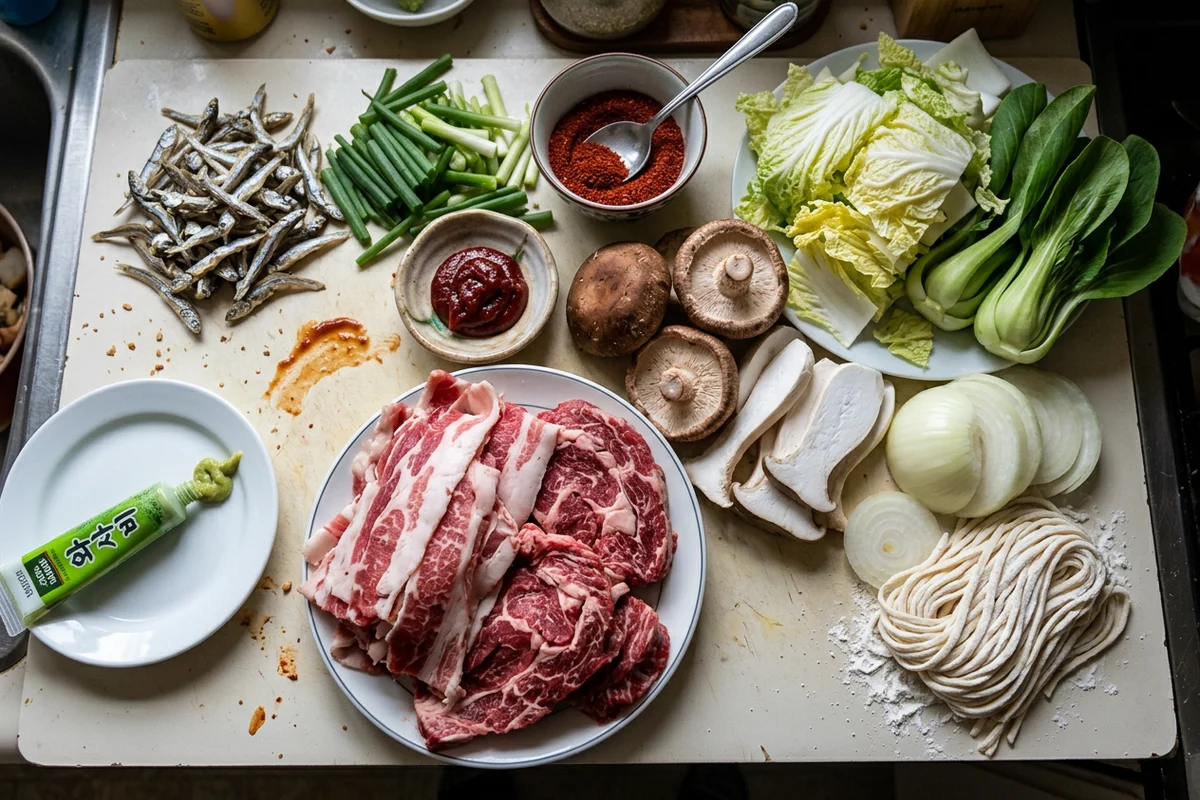
• Dried anchovies: Look for large dried anchovies at Korean markets. You can substitute equal parts low-sodium beef broth for the water and skip the anchovies entirely.
• Beef: Buy pre-sliced brisket or ribeye from an Asian grocer. If slicing at home, freeze the whole cut for 30 minutes to make slicing it paper-thin much easier.
• Gochujang and Gochugaru: These Korean chili ingredients provide the distinct red color and heat. Adjust the amounts based on your heat tolerance.
• Mushrooms: A mix of shiitake and king oyster mushrooms adds deep, earthy notes to the simmering broth.
Exact quantities are in the recipe card below.
How to Make Korean Hot Pot
Step 1: Prepare the Broth
Boil the water with dried anchovies, gochujang, gochugaru, soy sauce, and aromatics. Simmering this mixture extracts the rich flavors. Strain out the solids so you have a smooth liquid ready for the table.
Step 2: Arrange the Ingredients
Wash and dry all the vegetables, then cut them into bite-sized pieces. Arrange the sliced beef, mushrooms, and greens on large platters. Whisk together the soy sauce, vinegar, water, and wasabi for dipping.
Step 3: Cook and Enjoy
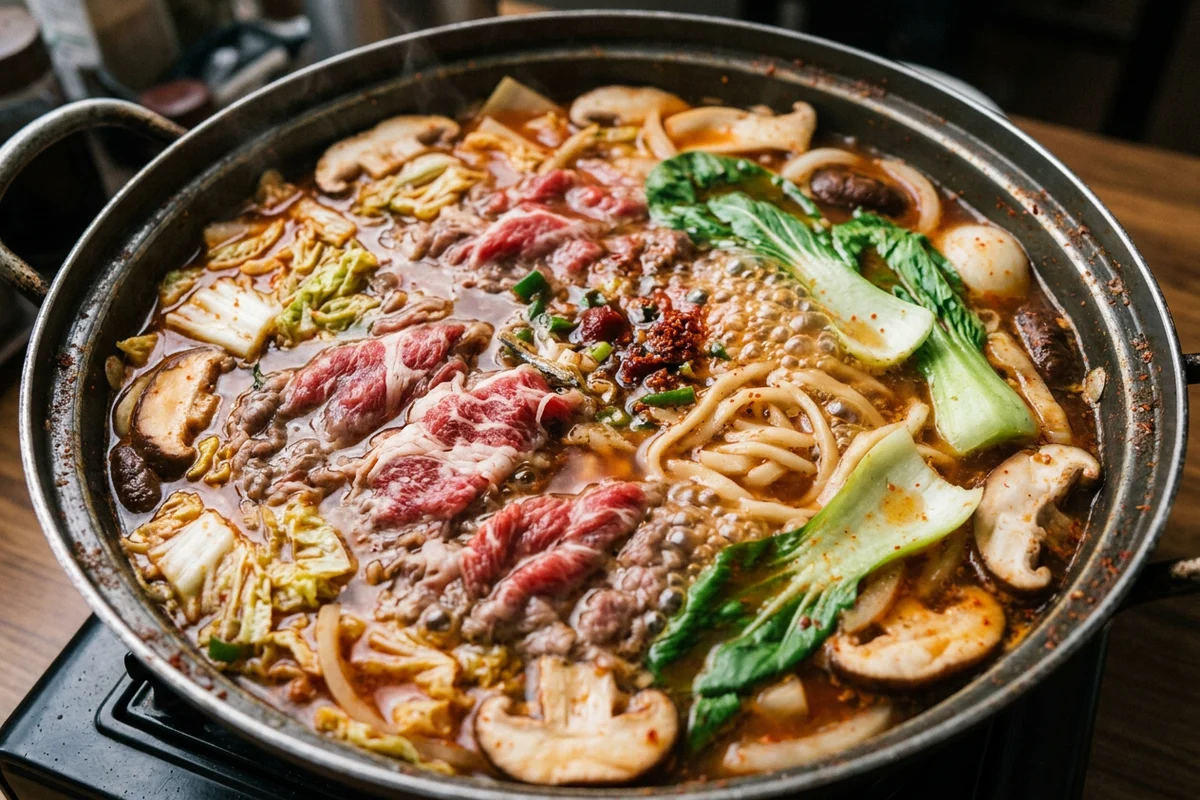
Bring a portion of the broth to a boil on a tabletop burner. Diners add vegetables and dip the beef slices until fully cooked. Replenish the pot with extra broth as it evaporates during the meal.
Step 4: Finish with Noodles and Rice
Boil fresh noodles in the remaining broth once the meat and vegetables are gone. Afterward, reduce the liquid to a thin layer and stir in cooked rice, kimchi, and an egg. Press it flat to form a crispy, savory crust.
What to Serve with Korean Hot Pot
Serve with a side of extra kimchi and pickled radishes to cut through the richness of the broth.
Expert Tips for Korean Hot Pot
Portable burner safety: Ensure your pot does not overhang the fuel compartment of a portable butane stove, as this causes a serious fire hazard. An electric tabletop burner is a safe alternative.
Food safety: Always cook whole cuts of beef to a safe internal temperature of 145°F (63°C) with a 3-minute rest. Eggs must reach an internal temperature of 160°F (71°C) for safe consumption.
Soup soy sauce (guk-ganjang) is lighter in color but saltier than regular soy sauce. If using regular soy sauce, add an extra tablespoon to the broth.
How to Store and Freeze Korean Hot Pot
Store any leftover uncooked meat and vegetables in separate airtight containers in the fridge for up to 2 days. Reheat leftover broth to a rolling boil before using it again.
Korean Hot Pot Recipe FAQs
Can I use chicken broth instead of anchovy broth?
Yes. If you prefer a milder flavor or cannot find dried anchovies, swap the water for low-sodium chicken or beef broth.
What kind of pot works well for this?
A wide, shallow pot works well so multiple people can reach in and cook their food at the same time. A fondue pot or an electric skillet also works.
Do I have to use a portable burner?
You can cook all the ingredients on your kitchen stove and serve the hot pot in large bowls, though you miss the interactive tabletop experience.
Korean Hot Pot
Ingredients
- 12 cups water or low-sodium beef broth 2.8 L
- 1 ounce large dried anchovies (about 30 anchovies) 28 g
- 1 green onion roughly chopped
- 1 dried red chili pepper
- 2 tablespoons soup soy sauce guk-ganjang
- 1 tablespoon gochujang Korean chili paste
- 1 tablespoon minced garlic
- 1 teaspoon gochugaru Korean chili flakes
- 1/4 teaspoon black pepper
- 1/2 cup soy sauce 120 ml
- 1/2 cup rice vinegar 120 ml
- 6 tablespoons water 90 ml
- 1 teaspoon wasabi paste
- 2 pounds very thinly sliced beef brisket or ribeye 900 g
- 8 ounces shiitake mushrooms stems removed, 225 g
- 8 ounces king oyster mushrooms sliced, 225 g
- 1 medium head napa cabbage chopped into 2-inch pieces
- 4 heads baby bok choy halved
- 1 medium onion sliced
- 8 ounces fresh kalguksu (Korean knife-cut noodles) or udon 225 g
- 2 cups cooked white rice 400 g
- 1/2 cup finely chopped kimchi 115 g
- 1 large egg
- 1 tablespoon toasted sesame oil
- 1 sheet roasted seaweed crumbled
Instructions
- In a large pot, combine the water, dried anchovies, green onion, dried red chili, soup soy sauce, gochujang, garlic, gochugaru, and black pepper. Bring to a boil over high heat, then reduce the heat to medium and simmer for 15 minutes.
- Strain the broth through a fine-mesh sieve, discarding the solids. Keep the seasoned broth warm on the stove.
- In a small bowl, whisk together the soy sauce, rice vinegar, water, and wasabi paste to make the dipping sauce. Divide this mixture into four small individual bowls.
- Arrange the sliced beef, shiitake mushrooms, king oyster mushrooms, napa cabbage, bok choy, and onion on large platters. Set up a portable burner in the center of your dining table.
- Pour about half of the strained broth into a wide, shallow pot and place it on the portable burner over medium-high heat. Once the broth is boiling, diners can begin adding vegetables and dipping slices of beef into the broth to cook. Ensure the beef reaches a safe internal temperature of 145°F (63°C) and rests for 3 minutes before eating.
- Dip the cooked meat and vegetables into the prepared sauce. Add more broth from the kitchen as the liquid in the pot evaporates.
- When most of the meat and vegetables are eaten, add the fresh noodles to the remaining boiling broth. Cook for 5 to 8 minutes until tender, then divide the noodles among the diners.
- Remove any leftover solids and leave just a thin layer of broth in the pot. Add the cooked rice, chopped kimchi, sesame oil, crumbled seaweed, and the egg. Stir vigorously over medium heat until the egg is fully cooked and reaches 160°F (71°C), about 3 minutes.
- Press the rice mixture flat against the bottom of the pot. Lower the heat and let it cook undisturbed for 5 minutes to form a crispy crust. Serve the fried rice directly from the pot.
Notes


