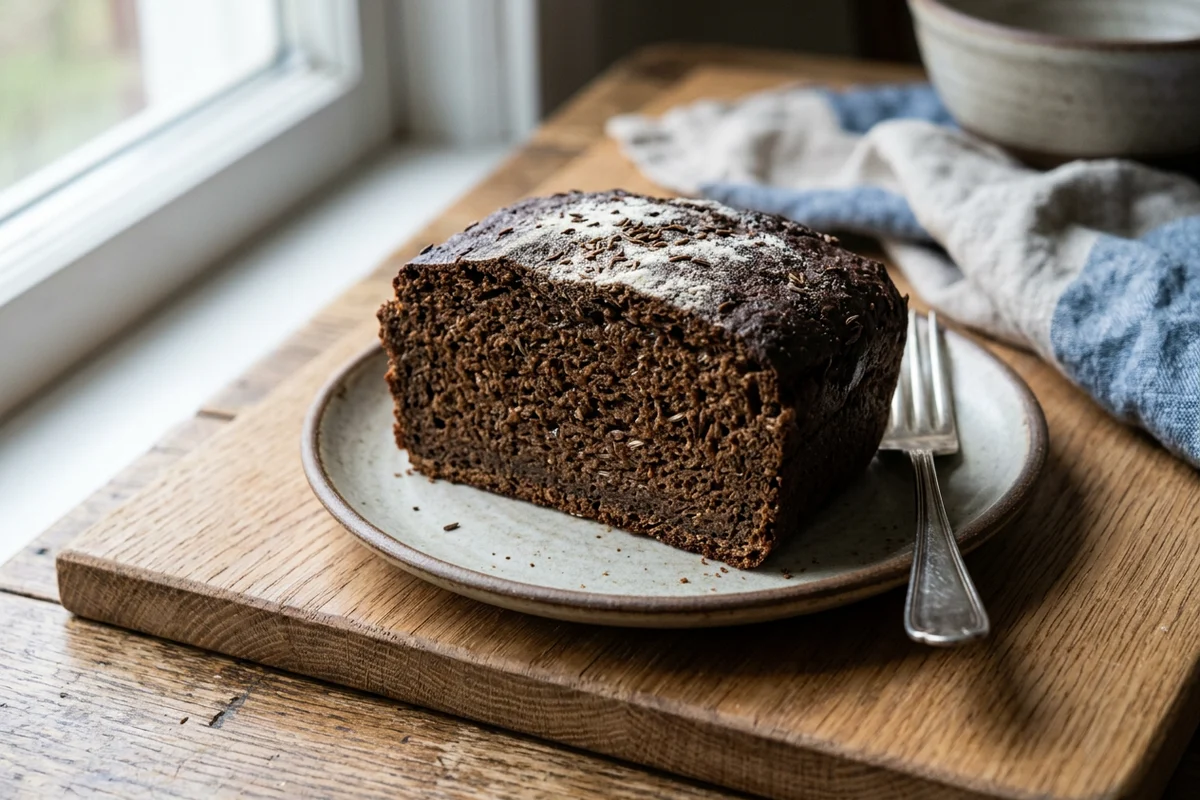
Pumpernickel bread is a dark, dense loaf known for its earthy flavor and tight crumb. It gets its signature color and subtle sweetness from a blend of molasses and cocoa powder, while caraway seeds add a distinct, savory note.
Baking this bread at home takes a few hours, but most of that is hands-off rising and baking time. It is a sturdy loaf that holds up well to heavy spreads, making it a reliable choice for dinner sides or robust sandwiches.
Why is Pumpernickel Bread a Must-Try?
Cooking the cornmeal with water first creates a thick base that helps retain moisture in the finished loaf.
Adding mashed potatoes to the dough yields a softer texture and extends the shelf life of the bread.
Skipping the second rise before baking ensures the bread develops its traditional dense, tight structure.
Ingredients for Pumpernickel Bread
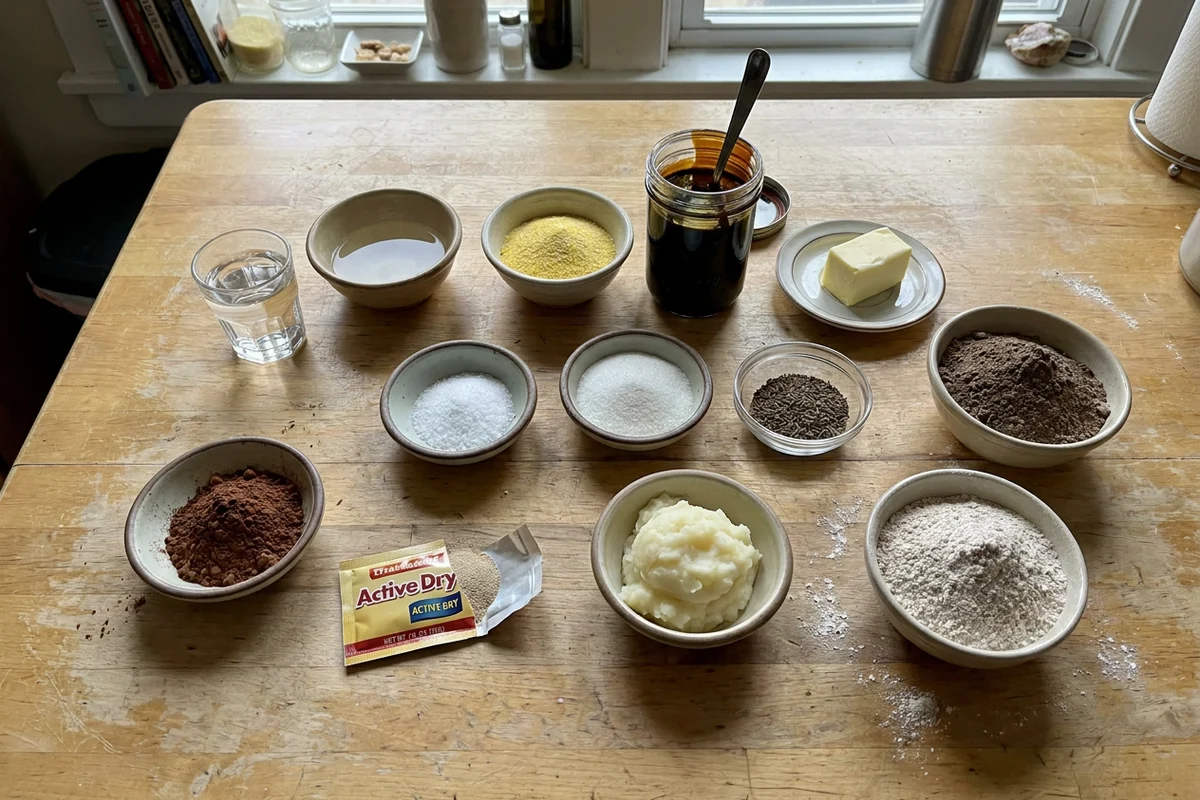
• Pumpernickel flour: This is a coarsely ground whole rye flour. If you cannot find it, dark rye flour is the closest substitute.
• Molasses: Use dark or robust molasses for a deep color and flavor. Avoid blackstrap molasses, which can make the bread too bitter.
• Cocoa powder: Unsweetened natural or Dutch-process cocoa powder works here. It is used for color and depth, not to make the bread taste like chocolate.
• Mashed potatoes: Use plain, unseasoned mashed potatoes. You can boil and mash a small potato specifically for this recipe.
• Caraway seeds: These provide the classic rye bread flavor. You can reduce the amount if you prefer a milder taste.
Exact quantities are in the recipe card below.
How to Make Pumpernickel Bread
Step 1: Prepare the wet base
Start by cooking the cornmeal and water on the stove until it forms a thick paste. Stir in the molasses, butter, spices, and cocoa powder, then let the mixture cool down so it does not kill the yeast later.
Step 2: Mix and knead the dough
Dissolve the yeast in warm water, then mix in the cooled cornmeal base and the mashed potatoes. Add both flours and knead the dough thoroughly. It will be very sticky, which is normal for rye-heavy doughs.
Step 3: Rise and shape
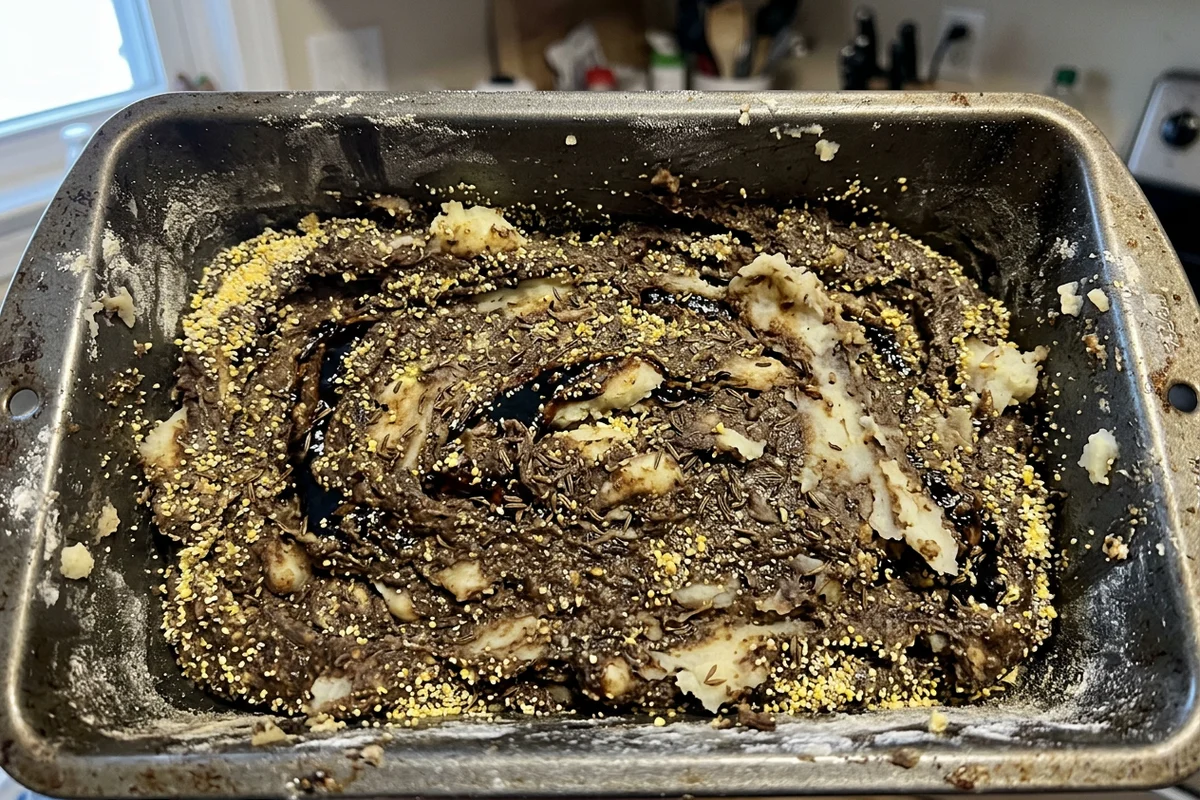
Let the dough rise in a covered bowl for about an hour. It will puff up but will not double in size. Shape the dough into a loaf and place it directly into a greased loaf pan.
Step 4: Bake the bread
Score the top of the loaf and bake it right away without a second rise. The bread is done when it reaches an internal temperature of 200°F (93°C). Let it cool completely on a wire rack before you try to slice it.
What to Serve with Pumpernickel Bread
Serve this dense bread alongside hearty beef stews, or use it to build a classic Reuben sandwich with corned beef and sauerkraut.
Expert Tips for Pumpernickel Bread
This traditional style of pumpernickel skips the second rise in the pan. This technique creates the dense, close-grained texture expected from this type of bread.
The dough is naturally very sticky. If you are shaping it by hand, lightly grease or flour your hands to prevent it from sticking to your fingers.
Make sure your mashed potatoes are plain. Avoid using leftover potatoes that have been heavily seasoned with garlic, cheese, or excess salt.
How to Store and Freeze Pumpernickel Bread
Store the bread tightly wrapped at room temperature for up to 4 days. To freeze, slice the loaf and place the slices in a zip-top freezer bag for up to 3 months. Thaw slices at room temperature or toast them directly from the freezer.
Pumpernickel Bread Recipe FAQs
Why is my pumpernickel dough so sticky?
Rye and pumpernickel flours absorb water differently than wheat flour, resulting in a naturally sticky dough. Resist the urge to add too much extra flour, or the baked bread will be dry.
Can I make this without a stand mixer?
Yes, you can knead the dough by hand. Because it is very sticky, it helps to lightly oil your hands and your work surface, and use a bench scraper to help turn the dough.
Why does this recipe skip the second rise?
Traditional pumpernickel is meant to have a very dense, tight crumb. Skipping the second rise in the loaf pan prevents the bread from becoming too airy.
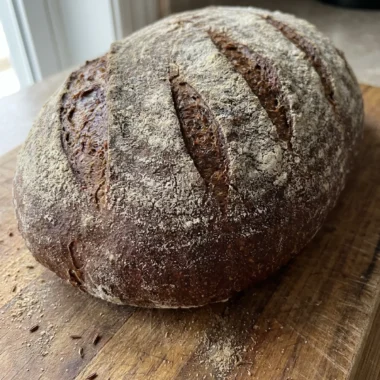
Pumpernickel Bread
Ingredients
- 1 cup water plus 1/2 cup (120 ml) warm water, divided, 240 ml
- 1/2 cup yellow cornmeal 60 g
- 1/4 cup dark molasses 85 ml
- 1 tablespoon unsalted butter 14 g
- 1 1/2 teaspoons fine sea salt 9 g
- 2 teaspoons granulated sugar 8 g
- 2 teaspoons caraway seeds 4 g
- 1 tablespoon unsweetened cocoa powder 5 g
- 1 tablespoon active dry yeast 9 g
- 1 cup plain mashed potatoes unseasoned, 170 g
- 3 cups pumpernickel flour 320 g
- 1 cup whole wheat flour 120 g
Instructions
- Combine 1 cup (240 ml) of water and the cornmeal in a small saucepan. Cook over low heat for about 5 minutes, stirring frequently, until the mixture thickens.
- Remove the saucepan from the heat. Stir in the molasses, butter, salt, sugar, caraway seeds, and cocoa powder until well combined. Set aside to cool until lukewarm.
- In a large mixing bowl or the bowl of a stand mixer, combine the remaining 1/2 cup (120 ml) warm water and the active dry yeast. Let it sit for 5 minutes to dissolve.
- Add the cooled cornmeal mixture and the mashed potatoes to the yeast. Stir to combine.
- Add the pumpernickel flour and whole wheat flour. Knead the dough on medium speed with a dough hook for 10 minutes. The dough will be quite sticky.
- Transfer the dough to a greased bowl, cover it with a clean towel, and let it rise in a warm spot for about 1 hour, or until it has expanded but not quite doubled in size.
- Preheat your oven to 375°F (190°C). Grease an 8.5 by 4.5-inch loaf pan.
- Shape the dough into a loaf and place it in the prepared pan. Dust the top lightly with flour and use a sharp knife to score the top.
- Bake for 55 to 65 minutes, until the center of the loaf reaches 200°F (93°C) on an instant-read thermometer. Remove the bread from the pan immediately and let it cool completely on a wire rack before slicing.
Notes